Hesse Lignal: 6x faster to UV color release
From laboratory knowledge to an intelligent AI twin.
How can color shades be developed faster for UV-curing lacquers without losing sight of important properties such as reactivity and curing behavior?
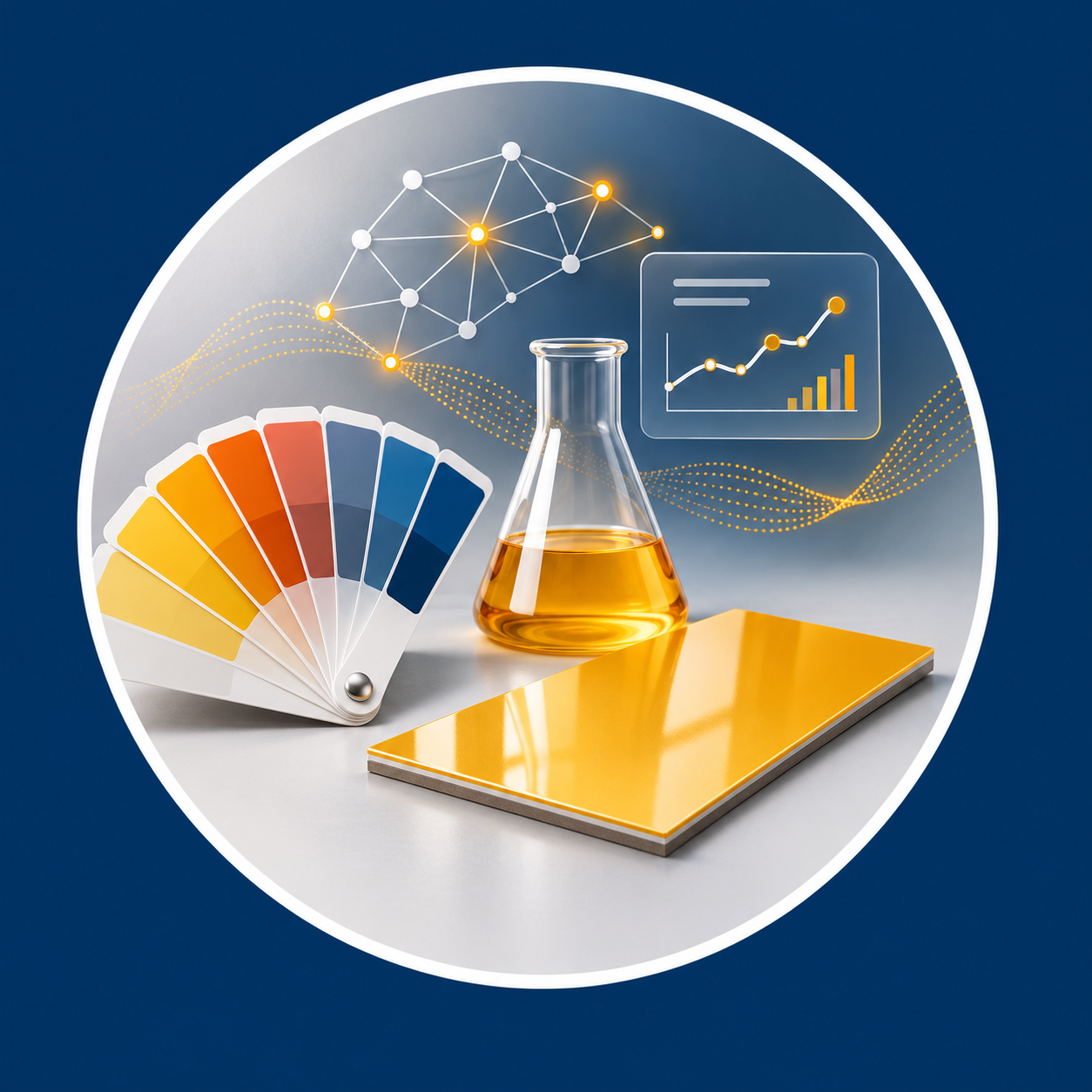
Together with Hesse Lignal, ai -predict has shown how the intelligent combination of measurement data, physicochemical knowledge and artificial intelligence can significantly improve formulation development.
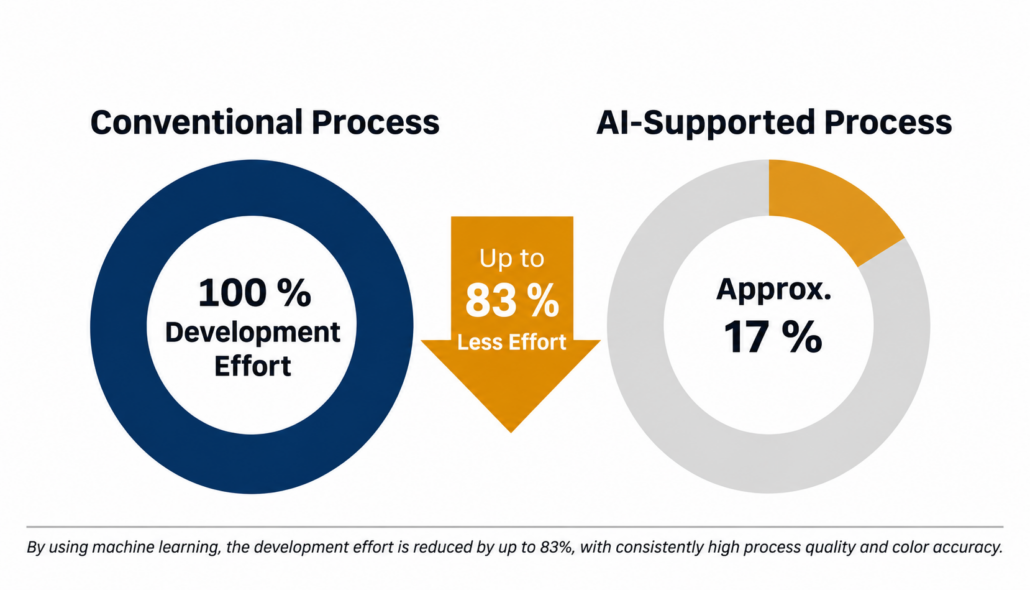
With our Deep Knowledge Integration (DKI) approach, development times were reduced by a factor of six and the necessary laboratory tests were significantly decreased in the investigated use case.
The result: Faster color development, transparent decisions and a return on investment within two years.

The Challenge: When Color and Curing Must Match
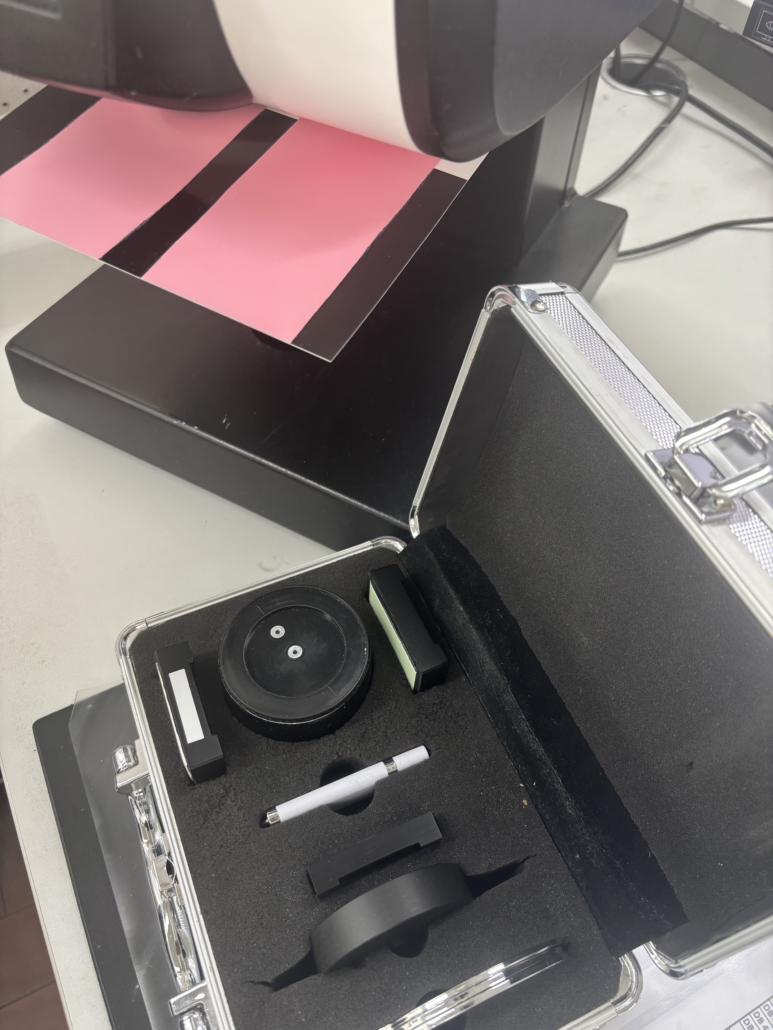
Developing UV-curable coatings is a complex process. In addition to the desired color, reactivity, curing behavior, and various process conditions must also be taken into account.
The transition to modern LED-UV technology, in particular, places high demands on formulation: LED light sources have narrower emission spectra, which means that existing formulations cannot always be used as-is without adjustments.
In pigmented coating systems, there are additional interactions between color and curing. Changes to individual raw materials can affect several properties at the same time.
The current approach: Experienced formulators develop and test different formulation variants through extensive laboratory testing.
The key question: How can these development steps be systematized to arrive at suitable formulations more quickly while also meeting the technical requirements?
The solution: Intelligently combine knowledge, data, and AI
Instead of advancing color development solely through repeated laboratory experiments, ai -predict relied on a systematic approach: Deep Knowledge Integration (DKI) .
To achieve this, existing formulation and measurement data were combined with physicochemical models and the expertise of Hesse’s formulators.
It was particularly important to take into account the relationships between color, photoinitiators, reactivity, and curing behavior.
Based on this, a digital decision-making environment was created in which various formulation alternatives could be calculated and evaluated.
The key difference: Instead of developing individual formulations through trial and error, it was possible to narrow down suitable solution spaces in a targeted manner and evaluate conflicting objectives in a transparent way.
This laid the foundation for faster, more systematic, and data-driven color development.

The results: Faster development. More informed decisions.
The use of Deep Knowledge Integration significantly accelerated color development at Hesse Lignal in the case study examined.
Up to 6× faster color development
The development time required was reduced to about one-sixth of the original effort.
Return on Investment within 2 years
Fewer laboratory tests, shorter development cycles, and more efficient decision-making processes made it possible to recoup the investment within two years.
In addition, conflicts between color, reactivity, and curing behavior could be better identified, and various formulation alternatives could be systematically evaluated.
The result: fewer rounds of testing, greater transparency, and a significantly more efficient formulation development process.
Request the full Hesse Lignal case study
6× faster color development—how was this achieved?
Learn in our eight-page case study how Hesse Lignal and ai-predict successfully combined existing measurement data, physicochemical knowledge, and AI.
Discover the Deep Knowledge Integration (DKI) approach, the technical implementation, and the results achieved.
Request the full case study now—free of charge and with no obligation.
We use your information solely to process your request and to send you the requested case study. For more information, please see our Privacy Policy.